Metabolic Health:
The Foundation Beneath How You Feel and Age

Metabolic health is about much more than how quickly you burn calories.
It reflects how effectively your body produces, stores, and uses energy—and how well it responds to food, movement, sleep, stress, and changing demands.
When metabolism is working well, your body can use glucose efficiently after a meal, store energy appropriately, access stored fuel between meals, and support healthy blood sugar, muscle, cardiovascular function, and hormone signaling.
In other words, metabolic health is an important part of how well we feel today and how well we age.
What Does “Metabolically Healthy” Mean?
There is no single test that defines metabolic health.
Instead, we look at a collection of markers, including:
Fasting glucose
Hemoglobin A1c
Fasting insulin
Triglycerides
HDL cholesterol
Blood pressure
Waist circumference
Body composition
These markers help tell the story of how well your body is managing glucose, insulin, and energy storage.
One important point: metabolic dysfunction can begin long before someone develops diabetes.
Blood glucose may still appear normal while the body is producing increasing amounts of insulin to keep it there. That is why I often like to look at fasting insulin alongside glucose, A1c, and other markers rather than relying on glucose alone.
Metabolic Syndrome & Insulin Resistance
Metabolic syndrome refers to a cluster of risk factors that commonly occur together:
Increased waist circumference
Elevated triglycerides
Low HDL cholesterol
Elevated blood pressure
Elevated fasting blood glucose
Meeting three or more of these criteria generally meets the definition of metabolic syndrome. Only about 6.8% of US adults have optimal cardiometabolic health According to a study published in the Journal of American Cardiology in 2022.
Underlying this pattern is often insulin resistance.
Insulin helps move glucose from the bloodstream into our cells. When cells become less responsive to insulin (which happens as we age), the body has to produce more of it to get the same job done.
Over time, this can contribute to rising blood sugar, abdominal weight gain, higher triglycerides, fatty liver, and increased cardiovascular risk.
The earlier we recognize the pattern, the more opportunity we have to influence it.
What is Metabolic Flexibility?
One of my favorite ways to think about metabolic health is through the concept of metabolic flexibility.
This is the body's ability to shift between different fuel sources depending on what is available and what it needs.
After eating, particularly carbohydrates, the body uses glucose for energy.
Between meals, overnight, and during activity, a metabolically flexible body can more readily tap into stored energy, including fat.
The goal is not to eliminate carbohydrates or try to burn fat all day.
The goal is adaptability.
A metabolically healthy body has options.
Muscle Is a Metabolic Asset
Muscle becomes increasingly important as we age.
Skeletal muscle is one of the body's major sites for glucose disposal. Regular muscle contraction also improves insulin sensitivity.
That makes resistance training one of the most valuable things we can do for both metabolic health and healthy aging.
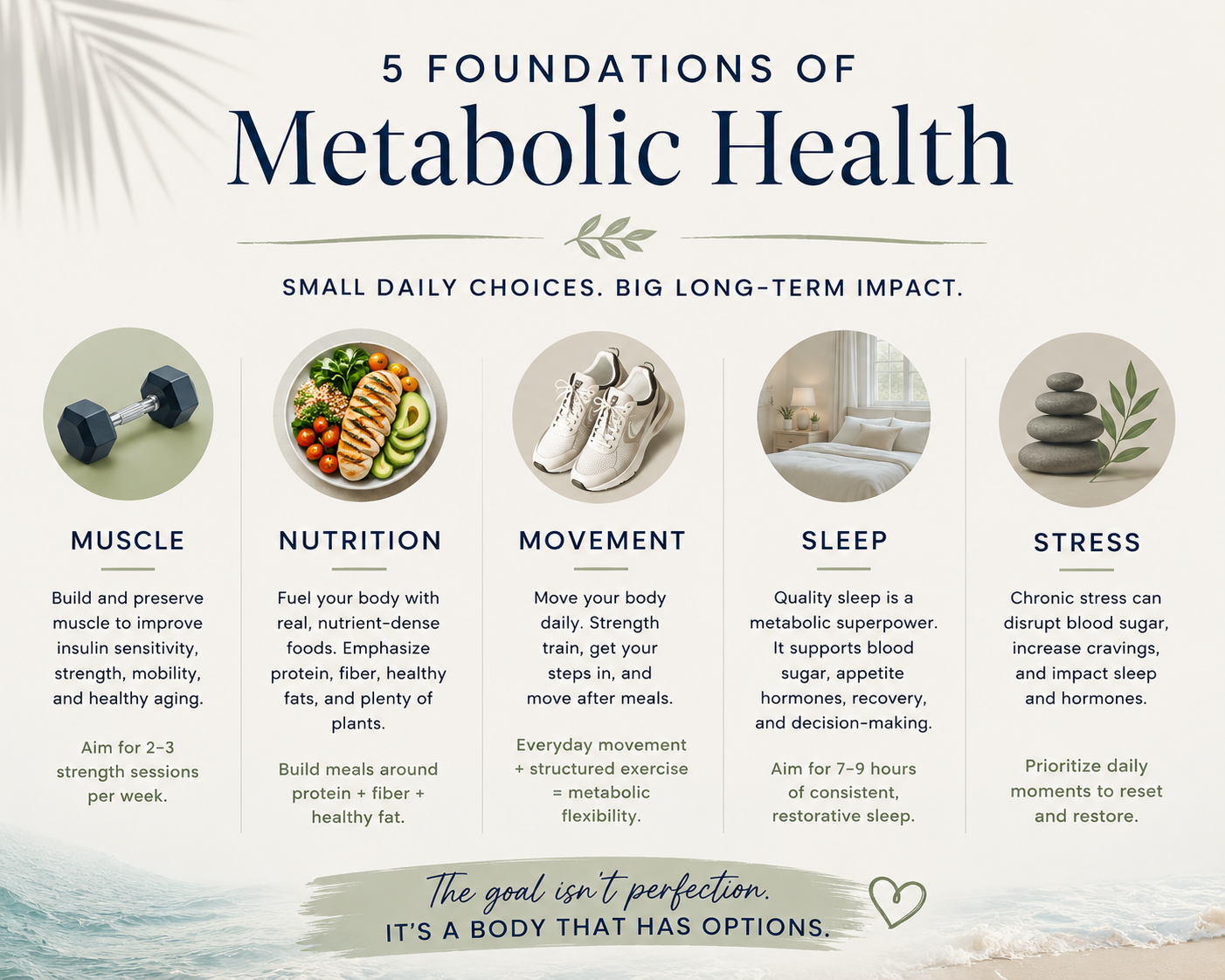
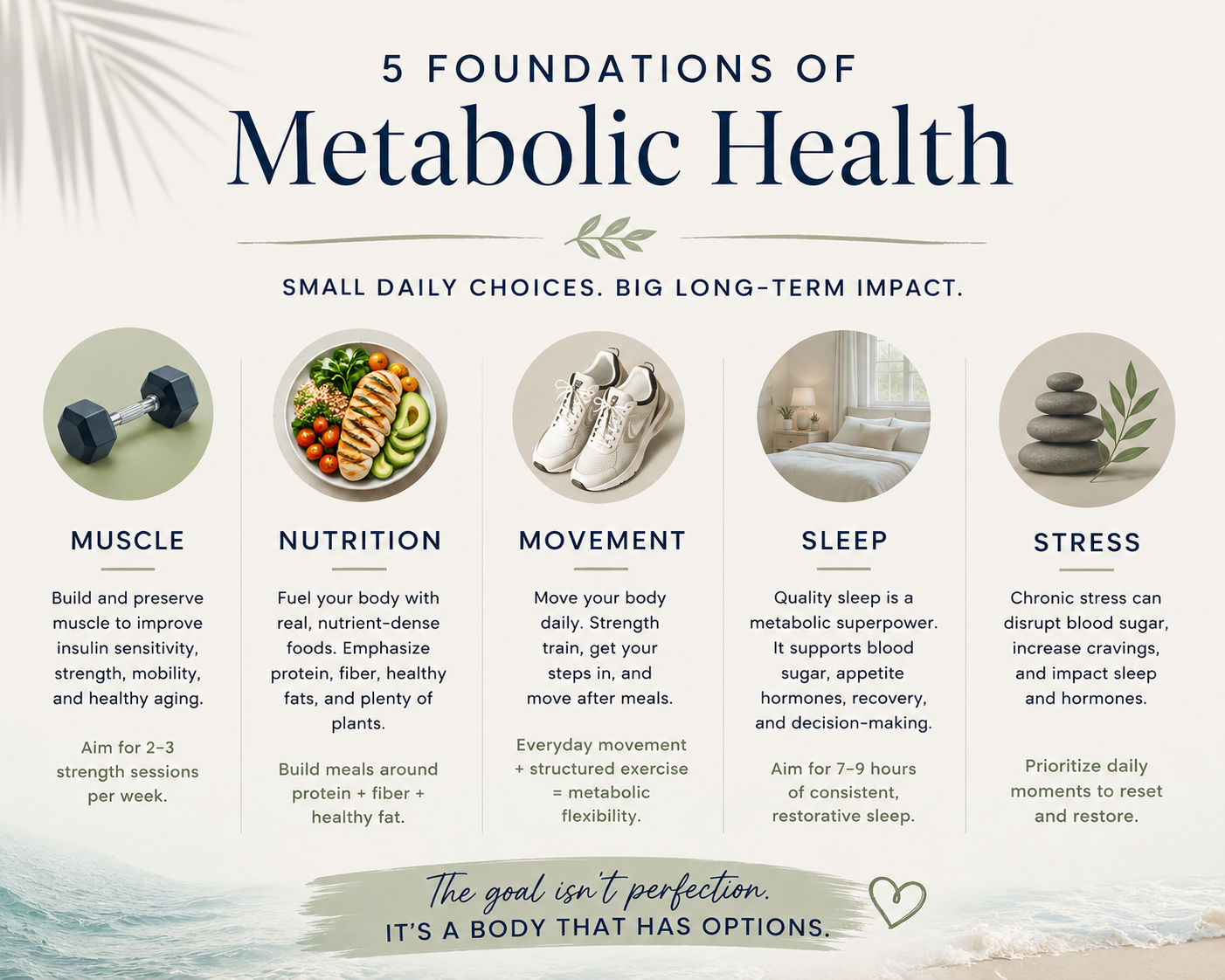
Maintaining muscle supports:
Glucose regulation
Strength and mobility
Bone health
Balance
Independence
Walking and cardiovascular exercise matter too, but we also need to give our muscles a reason to stay.
Build a Better Plate
Supporting metabolic health does not require a complicated diet.
A simple framework is:
Protein + Fiber + Healthy Fat
Protein supports muscle and satiety.
Fiber helps slow digestion, support blood sugar and cholesterol regulation, and feed beneficial gut microbes.
Healthy fats support satiety, hormone production, and absorption of important nutrients.
And carbohydrates do not need to disappear.
Instead, focus on choosing mostly minimally processed sources and pairing them well.
For example:
Fruit + nuts or nut butter
Crackers + hummus, turkey, tuna, or cheese
Rice or potatoes + protein + vegetables + olive oil
Oats + berries + chia + Greek yogurt
Meal composition matters.
"Metabolic health is an important part of how well we feel today and how well we age.”
Give Your Body Space Between Meals
Many of us eat from early morning until late at night, with very little time between meals and snacks.
For some people, reducing unnecessary grazing and allowing several hours between meals can help insulin come down and give the body more opportunity to access stored fuel.
That does not mean everyone needs aggressive fasting.
Something as simple as finishing dinner at 7 p.m. and eating breakfast around 7 a.m. provides a natural 12-hour overnight break.
The goal is not restriction. It is creating a healthy rhythm that works for your body.
Move More—Especially After Meals
Movement is one of the simplest ways to improve metabolic health.
A short walk after eating allows working muscles to take up glucose from the bloodstream.
It does not need to be formal exercise.
Walk the dog. Take a lap around the block. Clean the kitchen. Water the plants.
Small amounts of movement throughout the day add up.
Resistance training and aerobic exercise are equally important over time. Strength work helps preserve muscle, while aerobic activity improves cardiovascular fitness and insulin sensitivity.
Sleep and Stress Matter Too
Metabolic health is not just a food and exercise conversation.
Poor sleep can affect insulin sensitivity, appetite, cortisol, food choices, and energy.
Chronic stress can also keep the body in a more activated state, affecting blood sugar regulation and recovery.
That is why sleep, relationships, time outside, stress management, and recovery all belong in the metabolic-health conversation.
Know Your Numbers
If you want a clearer picture of your metabolic health, consider discussing these markers with your healthcare provider:
Fasting glucose
A1c
Fasting insulin
Triglycerides
HDL cholesterol
Blood pressure
Waist circumference
Body composition
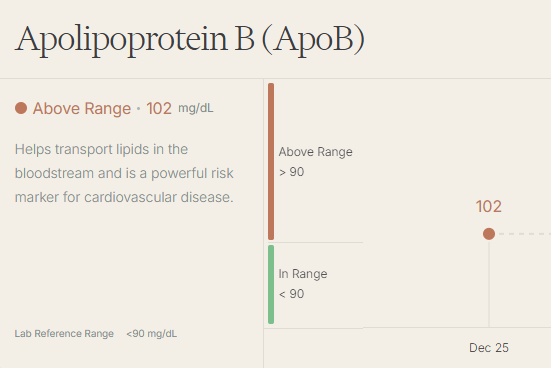
Depending on your health history and goals, additional markers such as liver enzymes, ApoB, lipoprotein(a), thyroid testing, and inflammatory markers may also provide useful context.
The key is not simply collecting more data.
It is understanding what the numbers mean together.
Start With the Foundations
There is no single diet, supplement, wearable, or testing panel that creates metabolic health.
The fundamentals still matter most:
Eat mostly whole foods.
Prioritize protein, fiber, and plants.
Maintain muscle.
Move throughout the day.
Exercise regularly.
Sleep well.
Manage stress.
Limit excessive alcohol.
Know your numbers.
And practice those habits often enough that they become part of your normal life.
You do not need metabolic perfection.
You want a body that is strong, responsive, and adaptable enough to support you well for the years ahead.
Wondering What Your Numbers Mean?
Your labs, nutrition, muscle mass, sleep, hormones, stress, and activity all tell part of the story.
If you have lab results but are not sure how the pieces fit together—or you want to improve your metabolic health but do not know where to focus first—I can help you identify the areas that deserve attention and translate them into realistic daily strategies.
Read More from Alicia