Heart Health - Test Don’t Guess
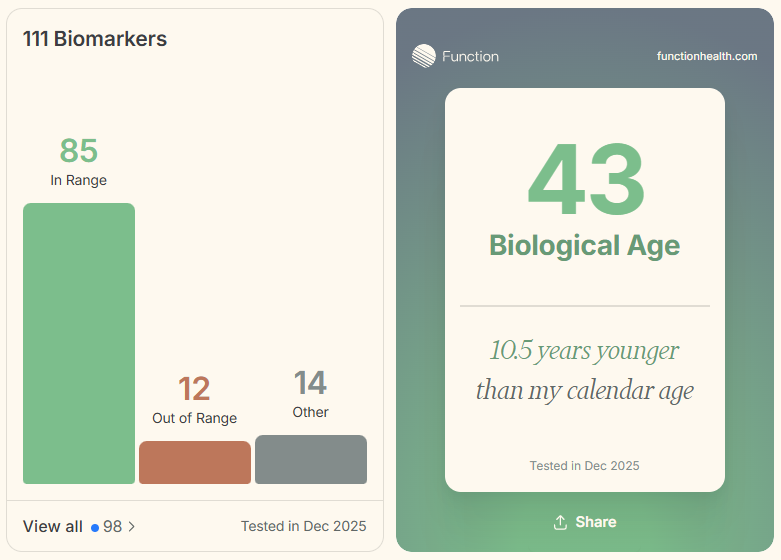
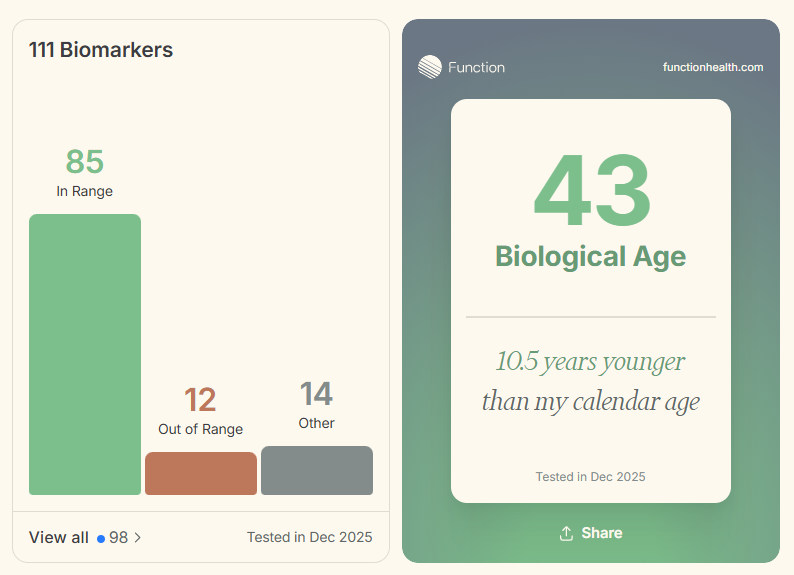
At the turn of each new year, I take time to get clear on what truly deserves my attention when it comes to my health. For me, that clarity starts with understanding how my body is functioning right now—before deciding what to change, add, or prioritize in the year ahead. One of the most valuable tools I rely on for that insight is comprehensive functional lab testing.
Functional testing empowers me—and my clients—with the information needed to be proactive about wellness. While standard lab ranges are designed to detect disease, functional testing asks a different question: how well is your body actually functioning? By evaluating trends and optimal ranges, it provides insight that supports long-term health, performance, and resilience.
When it comes to heart health specifically, most people assume a standard cholesterol panel tells the full story. In reality, some of the most important risk markers aren’t routinely included—and often go unnoticed until much later. Two of those markers are Lipoprotein(a) and ApoB. Understanding them can change how you think about cardiovascular risk and prevention.
Lipoprotein(a): A Genetic Risk Factor You Have to Ask For
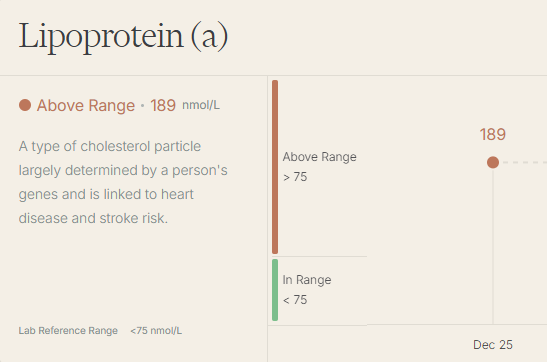
Lipoprotein(a), or Lp(a), is a type of cholesterol particle that’s largely inherited. It’s similar to LDL cholesterol, but it carries an extra protein that makes it more likely to contribute to inflammation, clotting, and plaque buildup in the arteries.
What makes Lp(a) especially important is that it increases cardiovascular risk independently of other cholesterol numbers. You can have a normal LDL, healthy triglycerides, and still carry higher risk if Lp(a) is elevated. Higher levels have been linked to heart attacks, certain types of stroke, and aortic valve disease.
Despite this, Lp(a) is not included in routine cholesterol testing. Because it’s mostly genetic and doesn’t fluctuate much, the only way to know your level is to test for it—ideally at least once as an adult.
In my own case, regular testing and an understanding of family history brought this marker to the surface. But this isn’t uncommon—many people only learn about elevated Lp(a) after a cardiac event. Knowing earlier gives you the opportunity to be proactive.
Why it matters:
You can’t directly lower Lp(a) with diet alone, but knowing your level helps guide how carefully you manage the factors you can influence—like inflammation, ApoB, blood pressure, insulin resistance, and overall lifestyle habits.
ApoB: The Number That Tells You How Many Risk Particles You Carry

While Lp(a) reflects inherited risk, ApoB helps clarify your current cardiovascular risk.
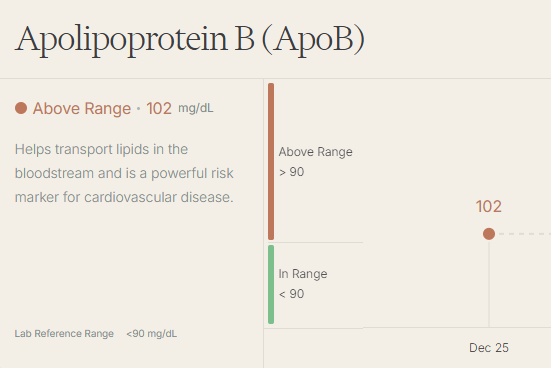
ApoB is a protein found on every cholesterol particle that can contribute to plaque formation. In simple terms, it tells us how many harmful particles are circulating, not just how much cholesterol they’re carrying.
This matters because traditional LDL cholesterol measures cholesterol content, not particle number. Two people can have similar LDL levels but very different ApoB—and very different risk.
Like Lp(a), ApoB is not always part of standard testing, even though it’s one of the strongest predictors of cardiovascular events. When ApoB is elevated, it suggests a higher burden of plaque-forming particles, even if other cholesterol values look “normal.”
Why Looking at Both Matters
Lp(a) and ApoB provide different—but complementary—insight. Lp(a) reflects genetic risk you didn’t choose; ApoB reflects how much modifiable risk is currently present. Together, they provide a more complete and meaningful picture than traditional cholesterol numbers alone—especially for people whose standard labs look “normal” but might still carry hidden risk.
The Bigger Takeaway
Testing these markers isn’t about chasing perfect numbers or creating worry. It’s about clarity. When you understand your risk more fully, you can make more informed, personalized decisions about nutrition, lifestyle, and long-term prevention.
That’s the essence of a test, don’t guess approach—using the right data to guide smarter choices, earlier.
If you’re curious how markers like Lp(a) and ApoB fit into your own health picture, my 2026 Lab & Nutrition Analysis package connects comprehensive testing with personalized dietary guidance—so you know exactly what to prioritize.
Read More from Alicia